561-532-2139


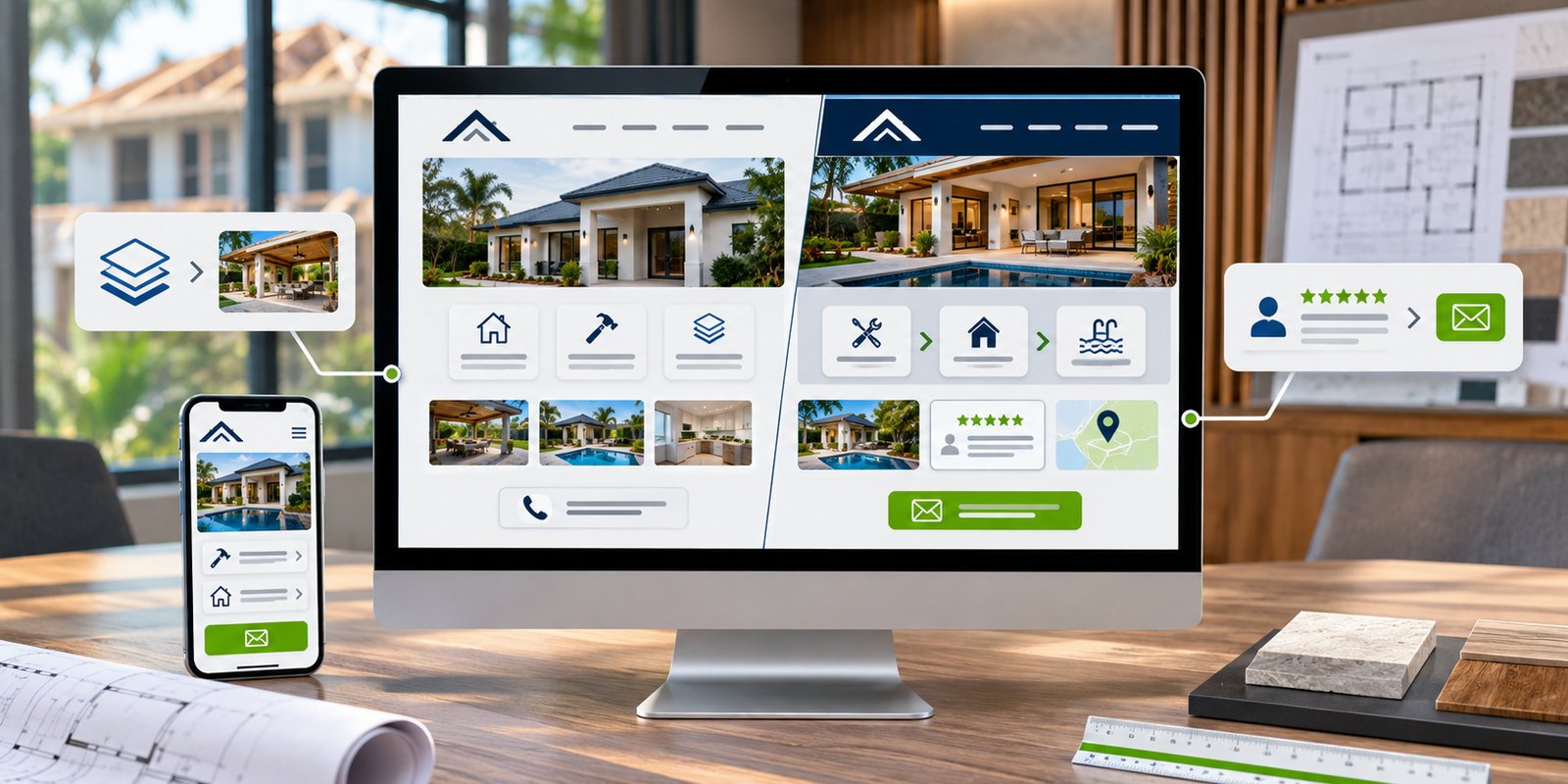

A contractor website can look professional, explain the company, and provide contact information without doing much to help an interested visitor move toward an inquiry.
That is where the difference between a brochure-style website and a contractor lead generation website becomes important.
A brochure website mainly presents the business. It may introduce the company, list services, show project photos, and provide a phone number or contact page. For some contractors, that basic role may be enough.
A lead-generation approach goes further by organizing the website around the questions people need answered before they decide to reach out.
The distinction is not about adding more sales language, more buttons, or more pages. It is about whether the website simply displays information or helps a potential customer understand the service, evaluate the business, and identify an appropriate next step.
For contractors reviewing an existing site, that difference can reveal whether the website is supporting customer decisions or functioning mainly as an online company brochure.
A Brochure Website Mainly Confirms That the Business Exists
A brochure-style contractor website usually handles the basics.
It may answer questions such as:
- Who is the company?
- What services are offered?
- Where does the business operate?
- How can someone make contact?
Those are necessary pieces of information.
The limitation appears when the website does not help visitors go much further.
A homepage might list roofing, remodeling, construction, or another set of services without explaining how those services differ. A project gallery may contain photos but give little context about the type of work shown. The contact page may provide a form, yet service pages give visitors few reasons to decide whether making contact is appropriate.
In that situation, the website works more like a digital business card.
That is not always a problem.
A contractor that receives nearly all work through established referrals may primarily need a credible website where prospective customers can confirm basic company information.
The problem appears when the contractor expects the website to play a larger role in attracting and converting interested visitors.
Someone arriving from search, a referral link, social media, or a Google Business Profile may need more than confirmation that the company exists. They may need enough information to decide whether the contractor fits their project.
A brochure website can introduce the company.
It does not always help the visitor make that next decision.
A Lead-Generation Website Follows the Customer's Decision Process
A lead-generation website begins from a different perspective.
Instead of asking only what the contractor wants to say, the structure considers what the customer needs to understand.
A prospective customer may already know that they need a contractor. Their questions are often more specific:
- Does this company provide the exact service I need?
- Does it work in my location?
- Can I understand what the service involves?
- Can I see relevant examples or other credible information?
- What should I do if I want to discuss the project?
A contractor website built around these questions can guide visitors through the research process more naturally.
That may mean giving major services dedicated pages rather than relying on a short homepage list. It may mean positioning relevant project information near the service it supports. It may mean giving visitors a clear next step once they have enough information to decide whether contacting the business makes sense.
Wellington Web Designs explains this broader approach in its guide to turning website visitors into inquiries.
The objective is not to pressure every visitor into submitting a form.
It is to remove avoidable uncertainty between arriving on the website and deciding whether to start a conversation.
Service Pages Reveal the Biggest Difference
Service pages often show the difference between the two website approaches most clearly.
On a brochure-style website, a service page may contain a heading, one or two paragraphs, an image, and a contact button.
That confirms the contractor provides the service, but it may leave important questions unanswered.
A more useful contractor service page explains enough for someone to determine whether the service may fit their situation.
Depending on what the business actually provides, the page might explain:
- What the service covers
- The type of project it applies to
- Common situations that lead customers to need it
- Where the service is available
- Relevant project examples
- Confirmed business or trust information
- What the next step is
The content should remain specific to the business.
A website should not add financing, emergency response, free estimates, warranties, particular materials, certifications, or other features simply because competing contractors mention them.
Useful information matters more than volume.
This also means that every small service does not need a separate page. When several offerings are closely related, grouping them can make more sense than creating multiple pages that repeat the same explanation.
The purpose of the structure is to help customers understand their options, not to maximize the number of URLs.
Trust Information Works Better When It Supports a Decision
Both brochure websites and lead-generation websites may include reviews, project photos, company history, or other trust information.
The difference is often how that information is used.
A brochure website may place all testimonials on one page and all photos in one gallery. A visitor researching a specific service then has to leave that information behind and search elsewhere for evidence that relates to the project.
A stronger structure brings relevant trust information closer to the decision.
For example, an appropriate project image may appear near the service it represents. Confirmed company information can be positioned where visitors may naturally want reassurance. Approved reviews can support relevant pages instead of existing only in a separate archive.
The goal is not to manufacture additional credibility claims.
It is to make genuine information easier for customers to connect with the service they are considering.
This approach is particularly useful for contractors because the work is often visual. Relevant project examples can give visitors context about the type of work the business performs.
Wellington Web Designs discusses similar trust and usability considerations in its resource on professional website design for home service businesses.
A general project gallery can still have value, but it should not be the only place where a visitor can find context about the contractor's work.
Contact Options Should Appear at the Right Point
A brochure website may include a Contact Us button in the header, another in the footer, and perhaps one on each service page.
That provides access to the contact page.
It does not necessarily create a clear customer path.
Someone who has just arrived may still be trying to understand what the contractor does. Another visitor may have reviewed a full service page, looked at relevant project information, and confirmed that the company works in the needed area.
Those visitors are at different stages.
A contractor lead-generation website places calls to action where they fit the surrounding content rather than repeating the same request everywhere.
A detailed service page may naturally lead toward a consultation or project discussion after answering the main questions. An educational article may first direct the reader to relevant service information. A project example may help someone confirm that the contractor handles the type of work they are considering.
CTA language also needs to reflect the contractor's actual process.
If the approved next step is a consultation, the website should not promise a free estimate, same-day response, inspection, or another service unless it has been confirmed.
Forms should follow the same principle.
They should collect enough information to begin a useful conversation without making the visitor complete unnecessary steps before anyone has spoken with them.
More forms and buttons do not automatically create more effective contractor lead generation.
Clearer timing and direction matter more.
Lead Generation Does Not Mean Turning Every Page Into a Sales Pitch
The phrase "lead generation" can create the wrong expectation.
A website designed to support inquiries should not feel like a constant advertisement.
Repeated pop-ups, oversized buttons, aggressive claims, and calls to action after every paragraph can make a website harder to use rather than easier.
Good conversion structure is usually quieter.
Visitors can understand the contractor's services. Navigation makes sense. Useful information appears where people expect it. Mobile users can move through the website comfortably. Genuine trust information supports important decisions. When someone is ready to make contact, the next step is easy to identify.
Educational content can also play a role.
Someone who is not yet ready to contact the contractor may have a specific question about a service or project. A useful article can answer that narrower question and connect the person with relevant service information when appropriate.
That gives visitors room to research without forcing the commercial page to answer every possible question.
A lead-generation website therefore needs balance.
Too little information gives people little reason to act. Too much promotional pressure can reduce clarity.
The goal is to make the website helpful enough that the right visitor understands the business and knows how to continue.
Decide What Role the Website Needs to Play
Not every contractor needs the same type of website.
The right structure depends on what the business expects the site to accomplish.
A contractor that relies heavily on established referrals may primarily need an accurate, professional online presence that confirms services and contact details.
A company expecting people to discover services through search, compare options online, review project information, and make inquiries through the website needs a stronger decision path.
Several questions can help reveal which situation applies:
- Can visitors quickly identify the service they need?
- Does each major service have enough information to be understood?
- Can people confirm whether the contractor works in the relevant area?
- Is useful trust information connected with the services it supports?
- Can mobile visitors navigate the site easily?
- Does each important page have an appropriate next step?
- Are visitors given enough information before being asked to contact the company?
If the answers are mostly no, the website may still be functioning primarily as a brochure.
That does not automatically mean the entire website must be replaced.
An existing site may benefit from stronger service content, clearer navigation, better placement of project information, more useful calls to action, or improved mobile usability.
More substantial structural problems may require a broader redesign.
The important point is to evaluate the website according to its intended job.
A contractor that only needs basic online confirmation should not add unnecessary complexity. A contractor expecting the website to contribute to new inquiries should not rely on a structure that only lists services and contact details.
For businesses in West Palm Beach considering that distinction, Wellington Web Designs can help review how the current site communicates services and guides potential customers.
Request a Free Consultation to discuss whether your website is simply presenting the business or helping visitors move toward the right next step.
FAQ
What is the difference between a brochure website and a contractor lead-generation website?
A brochure website mainly presents company information, services, and contact details. A contractor lead-generation website also organizes service content, trust information, navigation, and calls to action around the questions visitors need answered before deciding whether to make contact.
Does a contractor lead-generation website need more pages?
Not necessarily. Major services may need individual pages when they address distinct customer needs, while closely related services can often remain together. The goal is to create useful paths through the website rather than increase the page count.
Should every contractor website page have a contact form?
No. Visitors should have clear access to an appropriate contact option, but large forms do not need to appear on every page. Calls to action should fit the purpose of the page and appear after visitors have enough information to understand the next step.
Can a West Palm Beach contractor improve a brochure-style website without rebuilding it?
Sometimes. An existing site may improve through clearer service content, better navigation, more relevant trust information, stronger mobile usability, and better inquiry paths. A broader redesign may be appropriate when structural problems affect much of the website.