561-532-2139

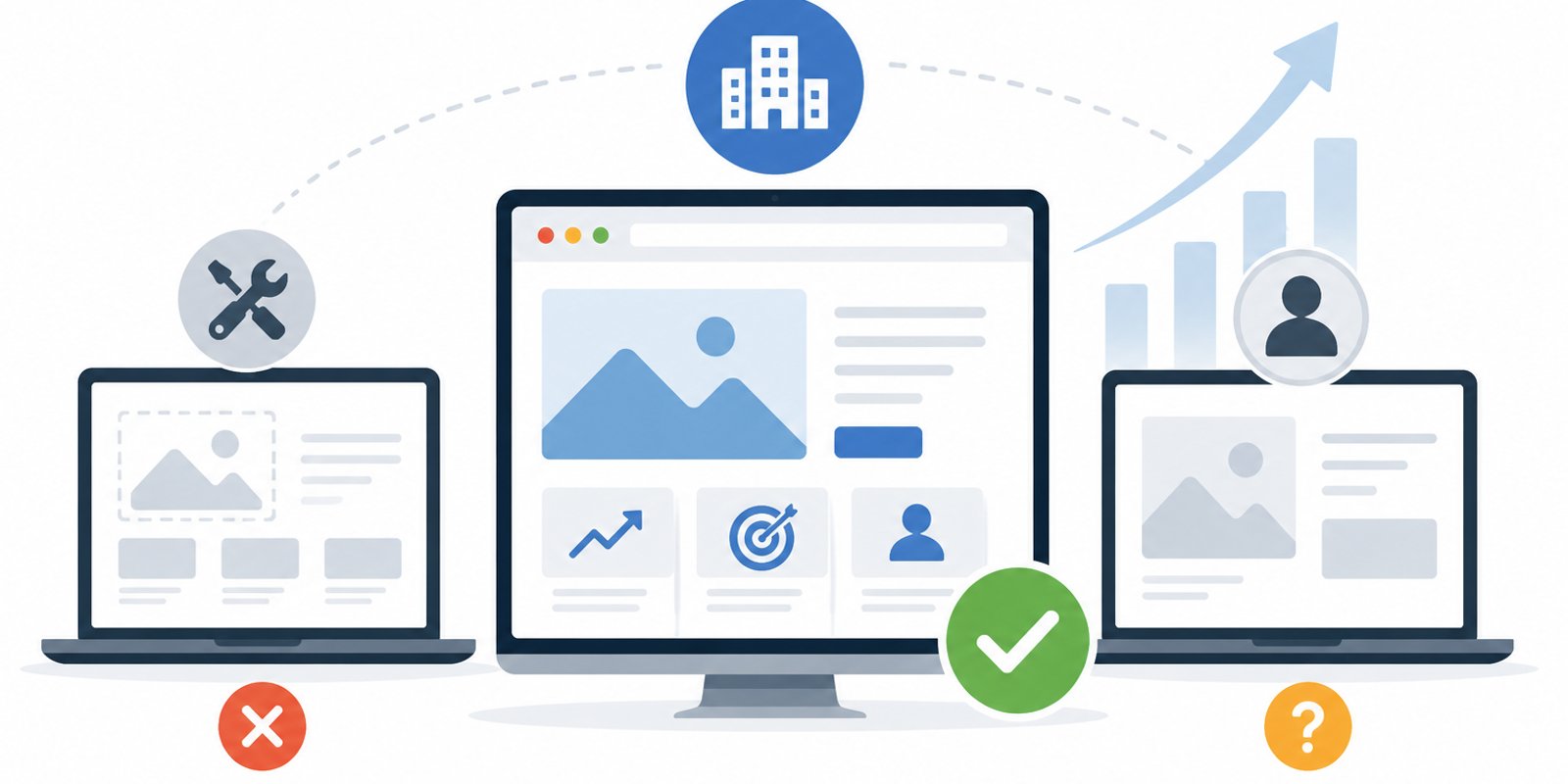

Many businesses focus heavily on marketing, advertising, and lead generation while overlooking problems within the website itself. The challenge is that websites often fail quietly. Unlike obvious operational issues, poor website performance usually reveals itself gradually through lower conversion rates, weaker SEO visibility, inconsistent lead quality, and reduced customer trust.
Because these issues develop over time, many businesses continue investing into growth initiatives without realizing the website itself is limiting overall performance.
A website is no longer simply an online brochure. It functions as a digital sales system, trust-building platform, conversion tool, and operational asset simultaneously. Even relatively small website mistakes can create measurable long-term consequences affecting customer acquisition and business scalability.
Businesses exploring professional web design west palm beach, fl services are often discovering that certain website decisions are quietly reducing performance across multiple areas of their business.
Mistake #1: Prioritizing Appearance Over Performance
One of the most common website mistakes businesses make is focusing almost entirely on visual appearance while overlooking performance and usability.
A website may appear visually modern while still suffering from problems such as:
- poor navigation
- confusing page flow
- weak calls to action
- slow load speeds
- mobile usability issues
- poor conversion structure
Many businesses assume that if a website “looks good,” it must be functioning effectively. In reality, visual design alone rarely determines whether a website converts visitors into customers.
For example, excessive animations, oversized media files, cluttered layouts, or overly complex page structures may actually reduce usability and increase bounce rates.
Strong websites balance aesthetics with functionality.
A conversion-focused web design company typically evaluates websites through both user experience and business performance perspectives rather than focusing on appearance alone.
Mistake #2: Ignoring Mobile User Experience
Many business owners still evaluate their websites primarily from desktop computers. However, most users now browse websites through mobile devices.
A website that performs poorly on mobile can create major conversion and SEO problems even if the desktop version appears acceptable.
Common mobile usability issues include:
- text that is difficult to read
- buttons too small to click
- broken layouts
- excessive scrolling
- slow mobile load speeds
- intrusive popups
- poor form usability
Visitors browsing on phones generally expect fast, frictionless experiences. If the website feels difficult to use, most users leave immediately rather than attempting to navigate around issues.
Mobile usability also directly affects search performance because Google prioritizes mobile-first indexing and user experience signals.
Businesses investing in scalable business website design strategies often focus heavily on mobile optimization because of its direct impact on both conversions and visibility.
Mistake #3: Weak Website Structure and Navigation
Another common issue is poor website organization.
Many websites grow gradually over time without a clear structural strategy. Businesses continue adding pages, services, blogs, and content without organizing the site properly.
This often creates:
- confusing navigation
- duplicate topics
- weak internal linking
- poor crawl structure
- difficult user flow
- inconsistent messaging
Visitors should immediately understand:
- what the business does
- who it serves
- how to take action
- where to find information
When websites become cluttered or difficult to navigate, users frequently leave before converting.
Similarly, search engines rely heavily on clean site architecture to understand content relationships and topical authority.
Poor structure quietly limits both usability and SEO scalability over time.
Mistake #4: Treating SEO as an Afterthought
Many businesses launch websites without considering SEO until months or years later.
This frequently creates expensive long-term problems because the underlying infrastructure may not support scalable optimization effectively.
Examples include:
- poor URL structures
- weak metadata
- missing page hierarchy
- thin content
- slow performance
- poor internal linking
- lack of service page depth
- duplicate content issues
Businesses often attempt to improve rankings later while working around limitations created during the original development process.
SEO works most effectively when integrated into website planning from the beginning rather than added afterward as a separate project.
Companies investing in scalable website development frequently benefit from building SEO-ready infrastructure early instead of retrofitting optimization later.
Mistake #5: Using Generic Messaging That Builds No Trust
Many websites contain extremely broad messaging that fails to differentiate the business from competitors.
Generic phrases such as:
- “high quality service”
- “customer satisfaction”
- “industry leader”
- “trusted professionals”
appear on thousands of websites across nearly every industry.
The problem is that generic messaging rarely builds trust or communicates value clearly.
Customers want clarity. They want to quickly understand:
- what makes the business different
- what problems are solved
- who the services are designed for
- what the process looks like
Websites lacking strong messaging often create hesitation even if the business itself performs well operationally.
Clear communication improves both user engagement and conversion performance significantly.
Mistake #6: Weak Calls to Action
Many websites unintentionally make it difficult for users to take the next step.
Common CTA issues include:
- unclear buttons
- inconsistent messaging
- hidden contact forms
- excessive steps
- weak placement
- confusing language
Visitors should never have to search extensively to understand how to contact the business or move forward.
Strong websites guide users naturally through the customer journey.
For example, service pages should clearly reinforce:
- what the service includes
- who it helps
- why it matters
- how to proceed
Websites without strategic conversion flow often generate lower inquiry rates despite receiving traffic successfully.
Businesses focused on scalable growth frequently prioritize conversion-focused website structures that reduce friction and improve lead generation performance.
Mistake #7: Neglecting Website Performance Over Time
A website is not a one-time project that should remain untouched indefinitely.
Websites require ongoing:
- performance monitoring
- optimization
- content expansion
- technical updates
- SEO improvements
- security maintenance
- conversion refinement
Many businesses launch websites and then neglect them for years while competitors continue improving their digital presence consistently.
Over time, this creates growing performance gaps.
Outdated websites often suffer from:
- slower load speeds
- compatibility issues
- declining SEO performance
- reduced trust signals
- outdated branding
- weaker conversion flow
A scalable digital strategy requires ongoing refinement rather than static maintenance alone.
Mistake #8: Focusing Only on Traffic Instead of Conversions
Some businesses become heavily focused on increasing traffic numbers while ignoring whether visitors are actually converting into customers.
Traffic alone does not create growth.
A website attracting large amounts of unqualified or poorly converting traffic may still perform poorly financially.
Conversion-focused websites prioritize:
- lead quality
- usability
- trust-building
- customer flow
- friction reduction
- strategic messaging
In many cases, improving conversion rates creates larger financial impact than simply increasing visitor volume.
Businesses investing in long-term digital performance often focus on strengthening website infrastructure before dramatically increasing advertising or SEO budgets.
Mistake #9: Choosing Short-Term Solutions Instead of Scalable Infrastructure
One final mistake many businesses make is choosing website solutions based entirely on short-term convenience.
Temporary solutions may initially feel practical, but over time businesses frequently encounter limitations related to:
- SEO scalability
- integrations
- mobile usability
- conversion optimization
- content organization
- operational efficiency
At that point, businesses often require expensive redesigns or repeated patchwork fixes.
A scalable digital foundation should support future growth rather than constantly requiring replacement.
Businesses investing in performance-focused infrastructure generally position themselves more effectively for long-term expansion and marketing efficiency.
Many companies trying to improve their digital performance eventually realize that website mistakes quietly affect nearly every aspect of customer acquisition, branding, SEO, lead generation, and long-term scalability. Businesses investing in stronger website foundations often discover measurable improvements across multiple areas of growth simultaneously.
FAQ
What are the most common website mistakes businesses make?
Common mistakes include poor mobile usability, weak SEO structure, confusing navigation, outdated design, and weak conversion flow.
Why is mobile optimization important for websites?
Most users browse on mobile devices, making mobile usability critical for conversions, customer experience, and SEO performance.
How does website structure affect SEO?
Website structure affects crawlability, internal linking, content organization, and overall search visibility.
Why do conversions matter more than traffic alone?
Traffic without conversions creates wasted marketing spend. Conversion-focused websites improve lead quality and overall business performance.
Should websites be updated regularly?
Yes. Websites require ongoing optimization, SEO improvements, security updates, and performance monitoring to remain effective long-term.